
what is america
from half-baked nationalism to a decolonial vernacular
After January 20, 2025, a few wacky days passed in which google maps appeared to demonstrate an eerie allegiance to the just-inaugurated president of the US. As per his wishes (executive order 14172, “Restoring Names That Honor American Greatness”), the most-used map and navigation platform in the world edited the label for that big body of water between northeastern South America and southeastern North America from the gulf of mexico to the gulf of america.
They weren’t wrong.
Of course, I disagree with the reasons behind the edit. The impulsive discourse of a half-baked nationalism characterized the political moment for the US. To be clear, gulf of america was meant to imply that the gulf belonged to [the united states of] america. But when we take a step back, counter to the intention of the US’ 45th president, more virtuous implications come into focus.
Should the gulf belong to the US? The question itself feels bizarre. It makes no more sense that the gulf should belong to the US than that it should belong to Mexico. Both countries are colonial constructs layered onto older geographies, older trade routes, older nations. Both are part of america.
Communities have inhabited the massive gulf region since time immemorial. Moving roughly clockwise from what are known post-colonially as the Yucatán Peninsula to the Florida Keys, they include the Yucatec Maya, Popoluca, Chontal Maya, Olmec, Nahua, Tepehua, Totonac, Huastec, Pintos, Carrizo, Comecrudo, Iipan Apache, Coahuiltecan, Pariame, Karankawa, Atakapa, Coushatta, Tangipahoe, Quinipissa, Mugulasha, Bayogoula, Houma, Chitimaca, Choctaw, Tahomé, Mobile, Biloxi, Pascagoula, Miccosukee, Seminole, Tequesta, Matecumbe, Tacobaga, Apalachee, and Calusa. Northwestern Cuba is also on the gulf, and was inhabited by Guanahatabey people during european exploration.
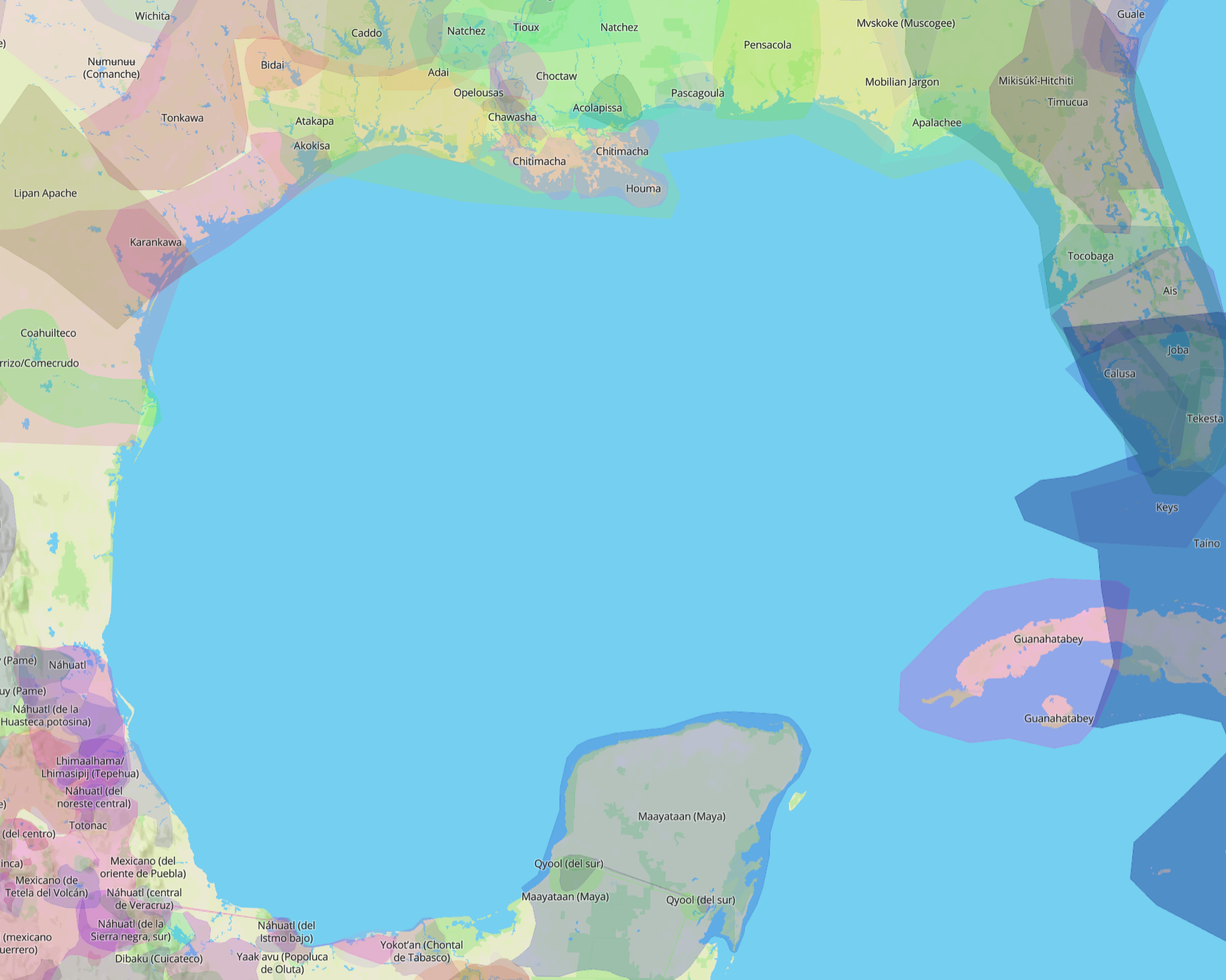
You know I love https://native-land.ca/maps/native-land.
Countless place names for the gulf and its waters existed long before Europeans began renaming and remapping the region. Maya communities referred to parts of the shoreline as Nahá (great water) and Chactemal (the red place). One documented Nahua (Aztec) name centers Chalchiuhtlicue, the diety associaited with water, rivers, and seas: Chalchiuhtlicueyecatl (the house of Chalchiuhtlicue).
Throughout the gulf, watery place names used language grounded in ecology, spirituality, cosmology, movement, kinship, and trade. While some linguistic traditions are documented, most names have been lost entirely. Genocide, forced displacement, and linguistic suppression erased communities, cultures, and entire geographic vocabularies from the historical record.
Over the course of the 1500s, European mapmakers published charts of the gulf under a rotating cast of names: Mar del Norte (sea of the north), Golfo de la Nueva España (the gulf of new spain [colony]), Sinus Magnus Antillarum (large round bay), Seno de Mejicano (mexican sound), and Golfo de Florida (gulf of florida). Each name positioned the water differently in relation to imperial ambitions, trade routes, settlements, and colonial claims. Long before contemporary nationalism, the gulf was already being linguistically reorganized to suit competing European projects of possession.
Reviewing these names reveals how geography becomes narratively reorganized through empire: renamed, bordered, and claimed according to whoever possesses the power to make their language stick. Yet embedded within gulf of america is another possibility entirely — one that goes beyond the US of A.
[For a more complete exploration of the ephemeral gulf of america, others have already written at length. But I’m not here for the gulf. I’m here for america.]
America is not a country. It’s all the land in the western hemisphere, from Ellesmere Island to Tierra del Fuego. The US is but one mere political formation within it.
And while america is undeniably colonial in origin—it emerged from the same colonial history described above, derived from the name of an Italian explorer and applied by Europeans to lands that were already inhabited, mapped, and named—it is at least expansive enough to describe the hemisphere as a whole rather than a single nation-state within it.
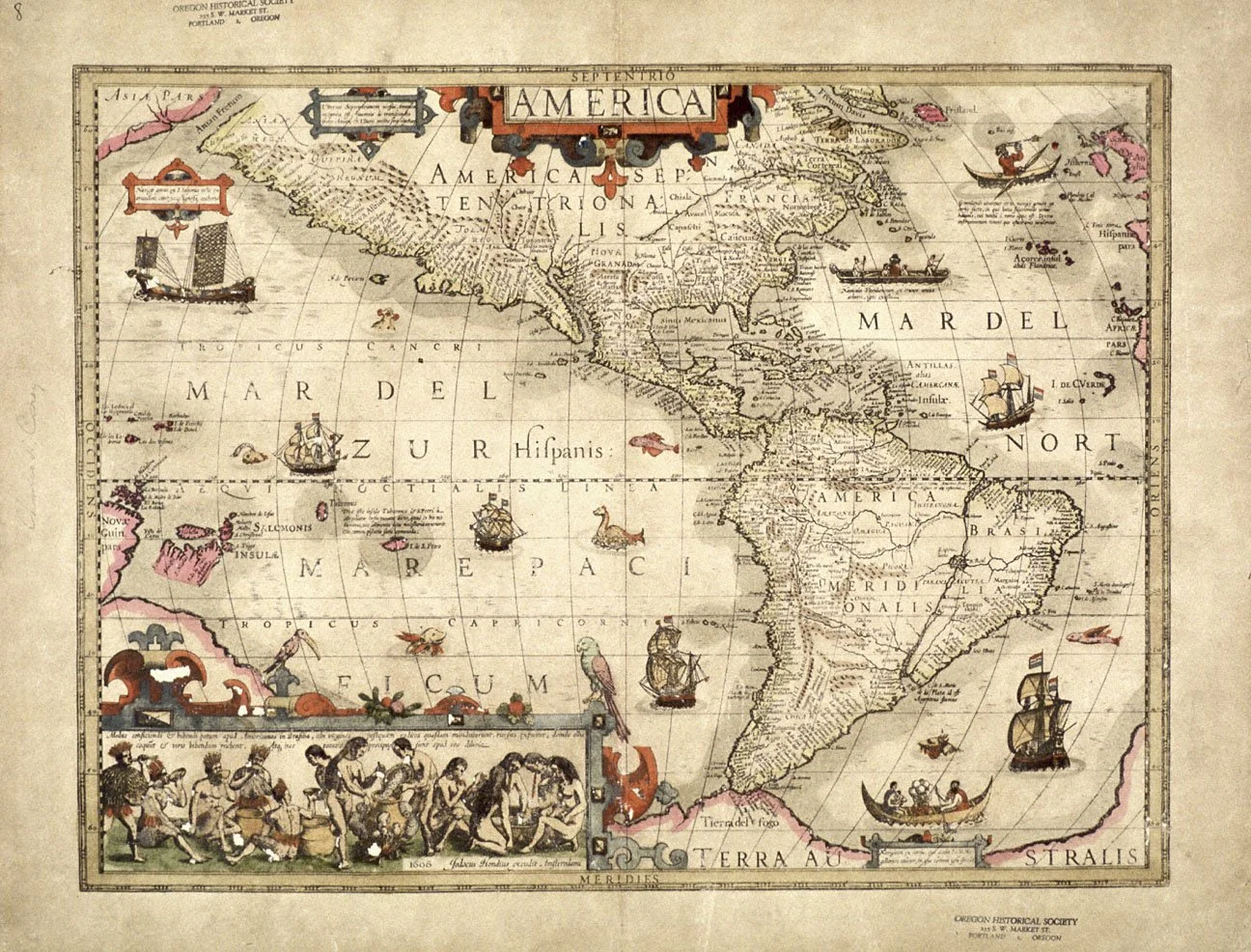
Reclaiming this broader meaning of america matters. Language alone cannot undo centuries of extraction, dispossession, and colonial violence. But language shapes the boundaries of political imagination. The words we normalize quietly determine who is centered and who remains peripheral.
I might even go so far as to say that this reframing is necessary if we care about justice and equity in a post-colonial world. Language reform alone will not do centuries of exploitation, but language shapes the boundaries of political imagination. The words we normalize quietly determine who is centered and who is peripheral.
Expanding america beyond the US in vernacular english may be relatively low-hanging fruit: a small linguistic shift capable of promoting broader decolonial awareness. It repositions the US as but one nation among many shaped by entangled histories of colonialism, genocide, extraction, and resistance. It challenges the neocolonial logic through which US political, economic, and cultural dominance is normalized across the hemisphere. It unsettles the hegemony that positions the US as the default, dominant, or definitive america.
Outside the US, people already identify as american while understanding their own countries to be part of a larger america. To broaden america is not to erase difference. Rather, it is to acknowledge multiple histories, multiple ways of knowing and belonging, and multiple americas within these lands.
The united states of America are but one part of America, and all the rest of it is America too.
